
Building materials API for BIM
API foundation for building information modelling - breaking data silos in construction.
The challenge
Building Information Modelling (BIM) connects design, construction, and operation in one digital building model. Construction is under pressure to digitise: move from analogue 2D drawings to intelligent 3D models that carry the data teams actually need.
The handover from planning to execution is still hard. Many workflows depend on individual experience while budget, schedule, and safety must be managed across many parties. BIM is meant to simulate processes, compare planning variants, and break down data silos.
The approach
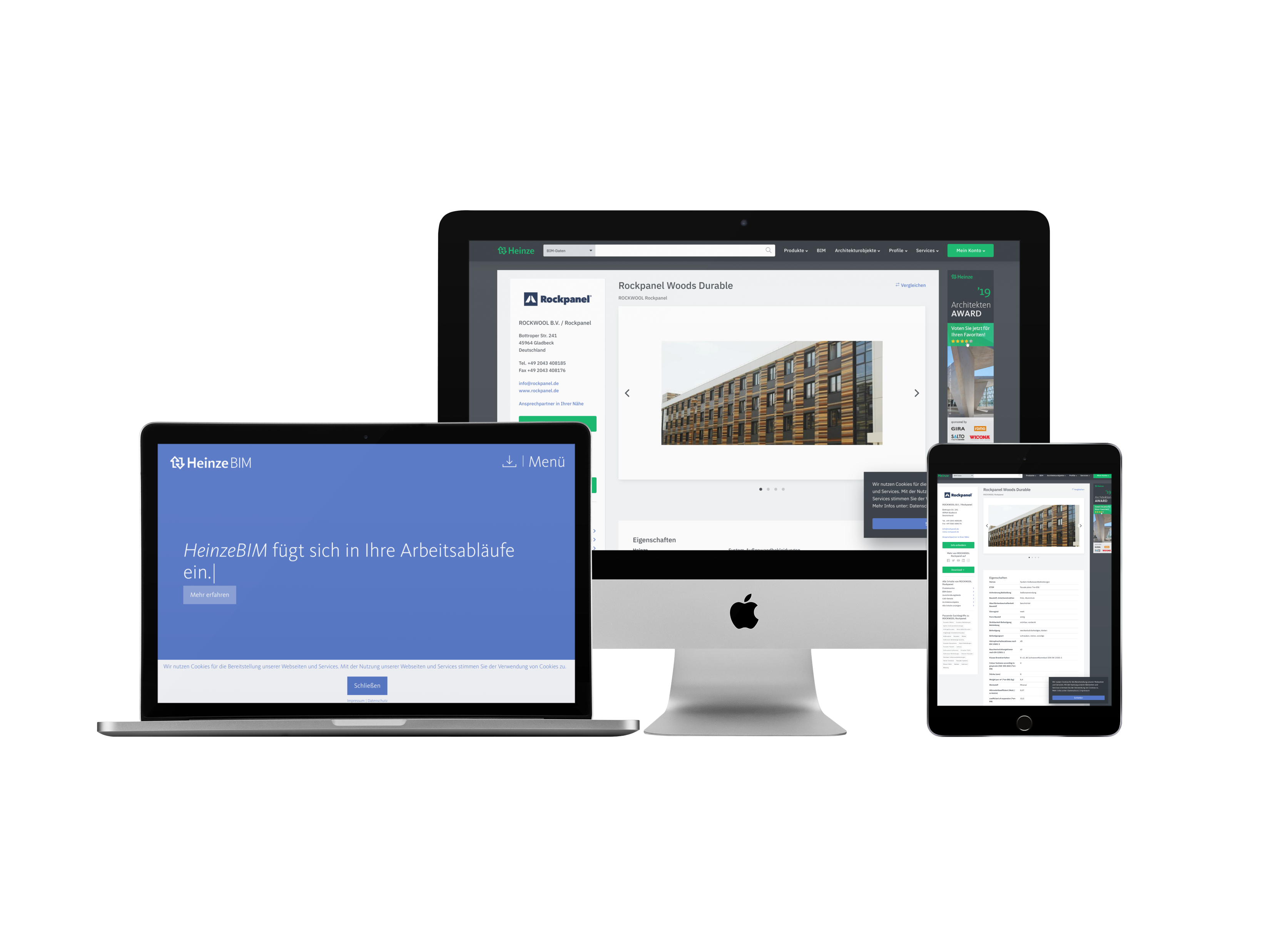
Together with Heinze GmbH (multimedia information partner for construction and interior products), we built HeinzeBIM as BIM-as-a-service: information and data management along the full construction process - not just feature delivery, but productised data logic for different usage contexts.
Architects, contractors, and suppliers faced an information gap: an overwhelming product landscape on one side, high waste when pushing product data to the right audience on the other. The platform makes the right information findable at the right time - and cuts paper volumes in planning offices.
What we delivered
- Product search API with classification and automated mapping of digital product data into six standard categories (datasheets, geometry, CAD details, specification text, and more)
- Cross-tool access to BIM data via the HeinzeBIM portal (overview video)
- Revit plugin serving required information through the API (usage video)
- IFC download for platform-neutral building information (Industry Foundation Classes)
- LOI management for solution-specific information in the building model
Heinze outlines the problem context in this video.
Tech stack
Go, Python, Django, JavaScript, gRPC, Elasticsearch, PostgreSQL, Redis, NSQ, NGINX, OAuth 2, ORY Hydra, Kubernetes (Helm), Prometheus, Grafana, Loki, Jaeger, Kibana, Fuseki, Swagger